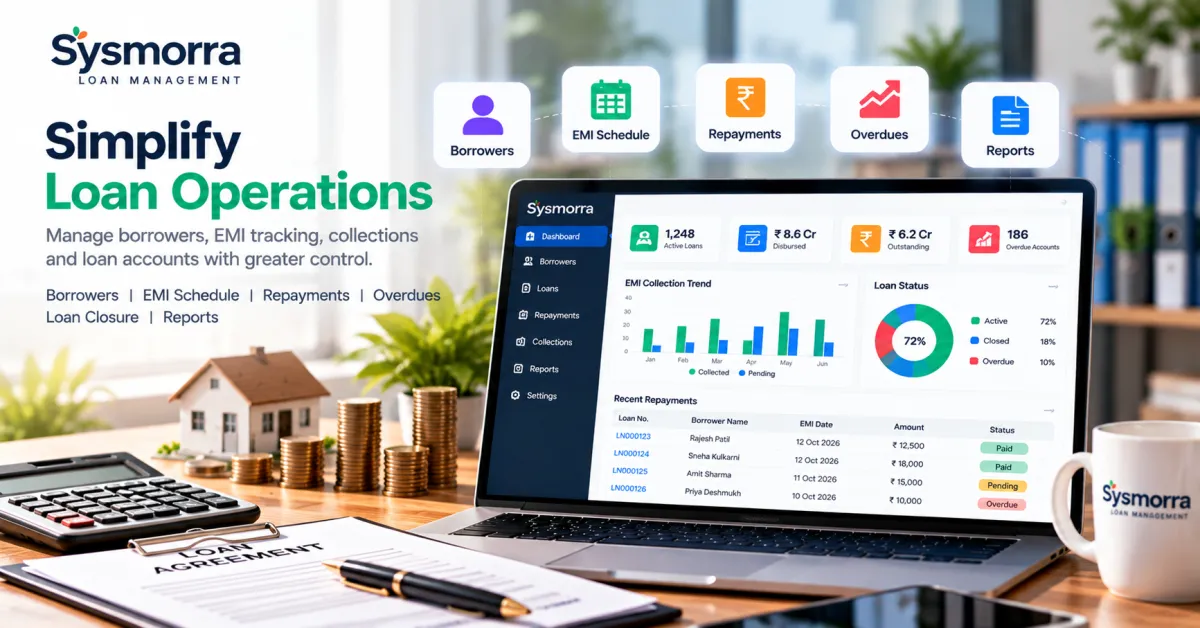
How Loan Management Software Simplifies EMI Tracking and Loan Collections
Managing loans requires accurate records, timely repayment tracking and clear visibility into outstanding balances.
Whether a lending organisation manages a small portfolio or hundreds of active loans, manual processes can become difficult as the number of borrowers and repayment transactions increases.
Loan management software helps organise the lending lifecycle by connecting borrower information, loan details, repayment schedules, collections and financial records.
What Is Loan Management Software?
Loan management software is a digital system used to administer loans throughout their lifecycle.
Depending on the organisation's requirements, the software may support:
-
Borrower records
-
Loan account creation
-
Principal and interest calculations
-
EMI schedules
-
Repayment collection
-
Overdue tracking
-
Payment receipts
-
Loan statements
-
Prepayment and foreclosure
-
Loan closure
-
Portfolio reports
A connected system helps reduce the need to maintain separate registers for each activity.
1. Maintain Accurate Borrower Records
Every loan begins with borrower information.
Lending organisations need to maintain customer details, loan references, repayment terms and other relevant records.
A centralised borrower database helps authorised employees retrieve information without searching through multiple files.
It also makes it easier to review a borrower's existing loan accounts and repayment history.
2. Generate Structured EMI Schedules
An Equated Monthly Instalment, commonly known as an EMI, is a regular repayment amount determined by the loan terms.
Depending on the loan structure, repayment schedules may include principal, interest and applicable charges.
Calculating these amounts manually can lead to errors, especially when different loans have different interest rates, tenures or repayment structures.
Loan management software can help generate and maintain repayment schedules based on configured loan terms.
3. Track EMI Collections
One of the biggest challenges in lending operations is tracking which instalments have been paid.
A borrower may make payments on time, partially pay an instalment or miss a scheduled payment.
A structured repayment system can help maintain:
-
Instalment due dates
-
EMI amounts
-
Payments received
-
Partial repayments
-
Outstanding instalments
-
Payment history
This gives collection teams a clearer picture of each loan account.
4. Identify Overdue Loans
Delayed repayments require timely attention.
Without accurate tracking, overdue instalments may remain unnoticed until several payment cycles have passed.
Loan management software can help identify overdue accounts and provide reports for collection follow-up.
This supports a more systematic approach to managing repayment delays.
5. Improve Payment Reconciliation
Loan repayments may be received through bank transfers, UPI, payment gateways or other supported methods.
When collection records and loan accounts are maintained separately, payments may require additional manual verification.
A connected system can help match payments with the appropriate borrower and loan account.
Accurate reconciliation is important for maintaining reliable outstanding balances.
6. Manage Prepayments and Loan Foreclosure
Some borrowers may wish to repay their loans before the original maturity date.
Depending on the loan agreement and applicable regulations, this may involve principal outstanding, accrued interest and permitted charges.
Loan management software can support the calculation and recording of eligible prepayments and foreclosure transactions.
After full settlement, the system should correctly update the loan balance, instalment records and closure status.
This helps prevent inconsistencies such as a closed loan continuing to display an unpaid instalment.
7. Maintain Loan Statements and Receipts
Borrowers may require payment receipts, repayment histories or loan account statements.
Generating these records manually can consume significant administrative time.
A structured loan system can help maintain transaction histories and produce consistent borrower-facing documents.
8. Improve Loan Portfolio Visibility
Lending organisations need to understand the performance of their overall loan portfolio.
Useful operational information may include:
-
Total active loans
-
Outstanding principal
-
Instalments due
-
Collections received
-
Overdue accounts
-
Closed loans
-
Foreclosed loans
These reports help management review collections and identify accounts requiring attention.
9. Reduce Manual Accounting Errors
Loan transactions may affect principal receivables, interest income, cash or bank balances and other accounting records.
When financial transactions are entered manually in several systems, reconciliation becomes more difficult.
A connected approach can improve consistency between loan administration and financial records.
10. Support Better Operational Control
Loan administration requires clear responsibilities and reliable transaction records.
Role-based permissions, transaction histories and approval processes can help organisations maintain internal controls.
These features are particularly important where multiple employees handle collections, account updates and loan closures.
Why Digital Loan Management Matters
A typical loan lifecycle may look like:
Borrower Registration → Loan Creation → EMI Schedule → Repayment Collection → Reconciliation → Loan Closure
Connecting these processes can reduce repetitive work and provide more reliable information throughout the loan lifecycle.
Introducing Sysmorra Loan Management
Sysmorra Loan Management is part of the Sysmorra business software ecosystem.
The platform is intended to support organised borrower administration, loan records, repayment schedules, collection tracking and loan lifecycle management.
A structured system can help lending teams maintain more consistent records and improve visibility into loan operations.
Organisations must also ensure their lending activities comply with applicable laws, licensing requirements and regulatory obligations.
Make Loan Administration More Organised
Managing loan accounts through disconnected spreadsheets can become difficult as a lending portfolio grows.
Digital loan management provides a more structured way to organise repayment information, collections and account records.
Explore Sysmorra Loan Management and discover a more connected approach to loan administration.