How Marketing Automation Helps Small Businesses Save Time and Improve Customer Engagement
Customer communication plays an important role in growing a business.
From responding to new enquiries to sharing important updates and maintaining relationships with existing customers, businesses need to communicate regularly.
However, manually sending messages, maintaining customer lists and remembering follow-up dates can become time-consuming.
Marketing automation software helps businesses organise repetitive communication activities and manage customer engagement through more structured processes.
What Is Marketing Automation?
Marketing automation refers to using software to manage and streamline marketing activities that would otherwise require repeated manual effort.
Depending on the platform, these activities may include:
-
Customer contact management
-
Audience segmentation
-
Email campaigns
-
WhatsApp campaigns
-
Follow-up reminders
-
Automated notifications
-
Personalised messaging
-
Campaign scheduling
-
Communication preferences
-
Campaign performance reports
The objective is not to replace personal customer relationships.
Instead, automation helps businesses maintain consistent communication while allowing employees to focus on more valuable customer interactions.
1. Respond Faster to New Enquiries
Customers often expect businesses to respond quickly after submitting an enquiry.
When employees are busy or enquiries arrive outside office hours, responses may be delayed.
Marketing automation can help businesses send an immediate acknowledgement when a new enquiry is received.
For example, a travel agency might automatically confirm receipt of a holiday enquiry and explain when the customer can expect further assistance.
This provides a more consistent initial customer experience.
2. Organise Customer Contact Information
Customer information may be distributed across spreadsheets, phone contacts, websites and previous transaction records.
A centralised contact database helps businesses maintain organised information for permitted communication.
Relevant records may include contact details, customer preferences, enquiry history and communication consent.
Keeping these records organised can reduce duplication and improve campaign targeting.
3. Segment Customers into Relevant Groups
Sending the same marketing message to every customer is rarely the most effective approach.
Different customers may have different interests, purchasing histories and communication preferences.
For example, a travel agency may group customers according to destinations of interest or previous bookings.
An accounting software provider may distinguish between prospective customers, trial users and existing subscribers.
Segmentation helps businesses create more relevant communication campaigns.
4. Use WhatsApp for Customer Engagement
WhatsApp is widely used for business communication in India.
Businesses may use approved WhatsApp messaging services to send relevant customer updates, reminders and marketing messages where permitted.
Examples include:
-
Enquiry acknowledgements
-
Appointment reminders
-
Booking-related updates
-
Customer feedback requests
-
Promotional campaigns
-
Festival greetings
Business-initiated WhatsApp messages may require approved templates, appropriate customer opt-in and compliance with Meta's messaging policies.
Automation should always respect customer communication preferences.
5. Improve Email Marketing
Email remains useful for sharing newsletters, product announcements, educational content and other business communications.
Marketing automation can help organise email audiences, schedule campaigns and maintain communication records.
For example, a business software company may send educational articles to subscribers who have requested product updates.
Campaign content should remain relevant and provide an appropriate unsubscribe mechanism.
6. Automate Routine Follow-Ups
Businesses frequently need to follow up after customer enquiries, demonstrations or other interactions.
When these follow-ups depend entirely on individual employees remembering dates, opportunities may be missed.
Automation can support scheduled reminders and appropriate follow-up messages.
However, sensitive or high-value conversations may still require personal attention from the sales or support team.
7. Personalise Customer Communication
Customers are more likely to find communication useful when it is relevant to their needs.
Marketing platforms can support approved message templates containing personalised information, such as customer names or relevant service details.
Personalisation should use accurate customer information and respect privacy preferences.
The goal is to provide meaningful communication rather than simply increasing message volume.
8. Manage Customer Consent
Responsible marketing requires businesses to respect customer choices.
Contacting people without appropriate permission can damage trust and may violate applicable laws or messaging-platform policies.
A structured marketing system can help maintain records of consent, communication preferences and opt-out requests.
Businesses should also maintain appropriate safeguards for customer data and comply with relevant privacy requirements.
9. Measure Campaign Performance
Marketing activities become more useful when businesses can evaluate their results.
Depending on the channel and available reporting data, useful metrics may include:
-
Messages submitted
-
Messages delivered
-
Email opens
-
Link clicks
-
Customer responses
-
Unsubscribes
-
Campaign-related enquiries
These metrics help businesses understand which communications are useful and where improvements may be needed.
10. Connect Marketing with Business Operations
Marketing automation becomes particularly valuable when it is connected with other business processes.
For example, a travel business may want to communicate with customers after an enquiry, quotation or completed trip.
A business software provider may want to send onboarding information after a new customer registers.
Connected workflows can help reduce duplicate customer records and maintain more consistent communication.
A Practical Marketing Automation Workflow
A simple marketing process may look like:
Customer Enquiry → Consent & Preferences → Audience Segmentation → Campaign → Customer Response → Reporting
Businesses can begin with a small number of useful communication workflows before introducing more advanced automation.
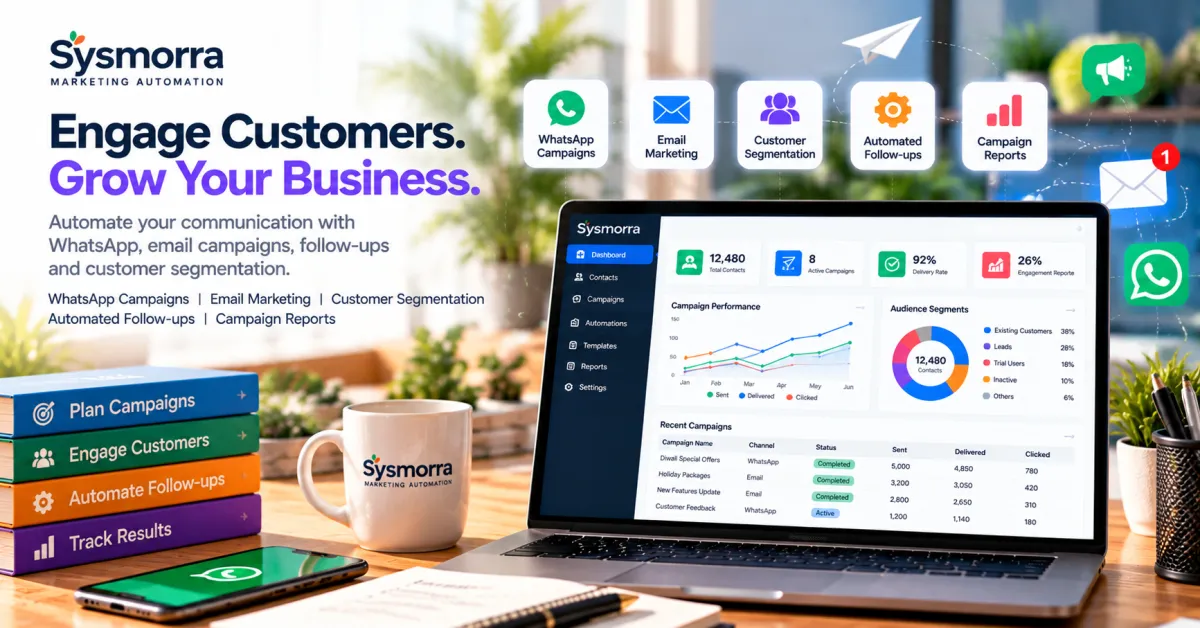
Introducing Sysmorra Marketing Automation
Sysmorra Marketing Automation is part of the Sysmorra business software ecosystem.
The product vision focuses on helping businesses organise customer contacts, communication preferences, campaigns and messaging activities.
The broader objective is to support relevant customer engagement through structured workflows and connected business information.
Marketing automation works best when it combines useful technology with responsible communication practices.
Build Better Customer Relationships
Growing a business does not necessarily mean sending more marketing messages.
It means reaching the right customers with relevant information at the appropriate time.
By organising contacts, automating repetitive tasks and respecting customer preferences, businesses can build more consistent communication processes.
Explore Sysmorra Marketing Automation and discover how connected customer communication can support business growth.